Tag: Sustainability

  • Production of Sustainable Construction Materials Using Agro-Wastes

    Production of Sustainable Construction Materials Using Agro-Wastes

    The construction industry is under intense pressure to reconcile rapid urbanization with the urgent need to protect dwindling natural resources.

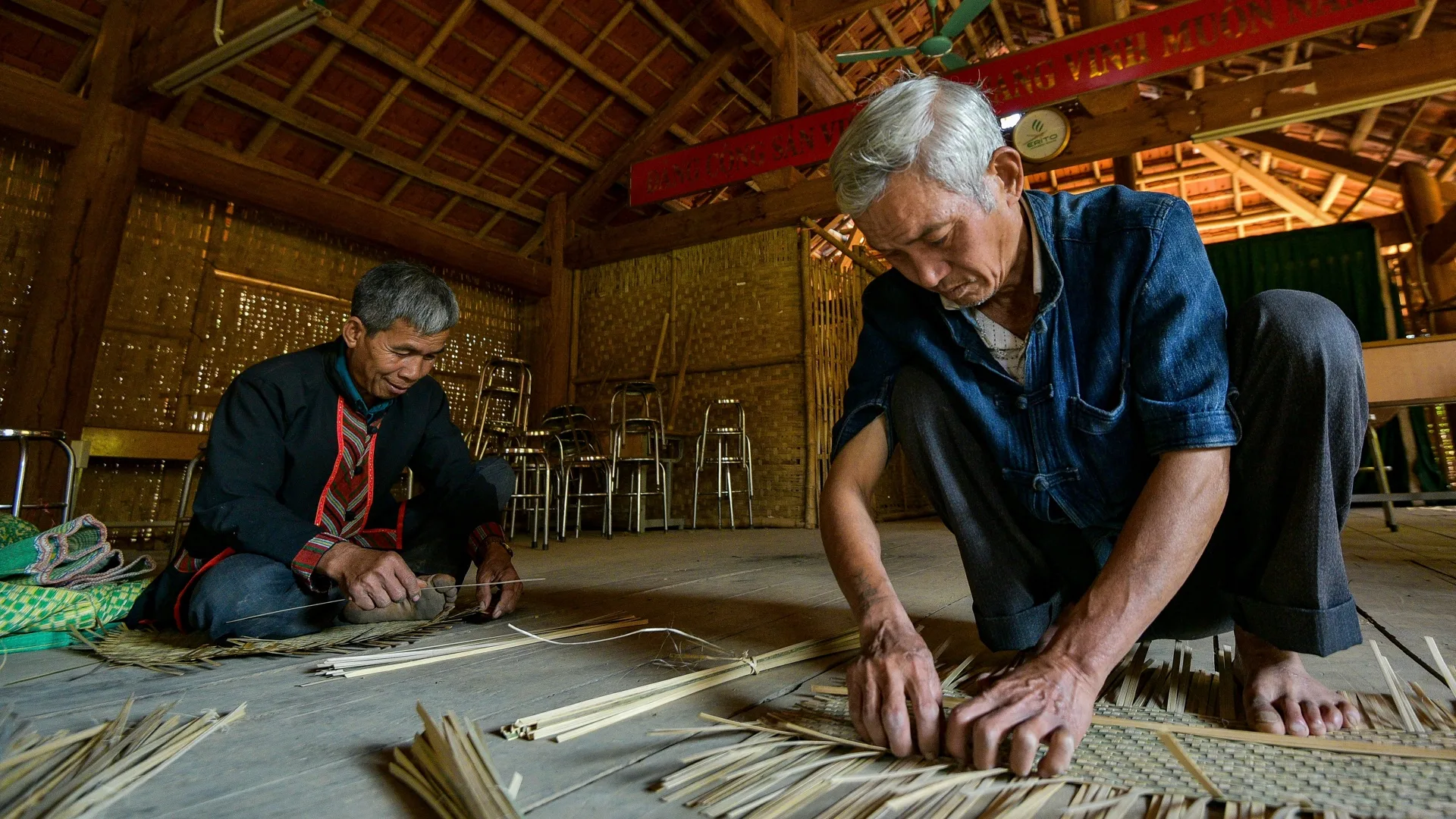
    This research identifies agro-waste—specifically the ashes and fibers from crops like rice, sugarcane, and bamboo—as a potent alternative for developing sustainable building materials.

    By reviewing the application of these wastes in bricks, concrete, insulation, and bio-plastics, the study demonstrates that these “green” alternatives are not just experimental; they consistently meet or exceed established building standards.

    The findings explicitly state that transitioning to agro-waste materials offers a triple-win for the sector: it diverts waste from landfills, reduces the environmental impact of mainstream materials, and ensures long-term economic and social sustainability.

    For the construction sector, this research confirms that the path to a sustainable future lies in the “circular” repurposing of agricultural by-products into the very foundations of our cities.

    Learn more about this study here: https://doi.org/10.3390/ma13020262


    Reference

    Maraveas, C. (2020). Production of Sustainable Construction Materials Using Agro-Wastes. Materials, 13(2), 262

  • Design for Deconstruction Using a Circular Economy Approach: Barriers and Strategies for Improvement

    Design for Deconstruction Using a Circular Economy Approach: Barriers and Strategies for Improvement

    While the circular economy offers a clear path to sustainability, the construction industry faces a significant “implementation gap” when it comes to Design for Deconstruction (DfD).

    This study identifies 26 specific barriers—ranging from weak legislation to a lack of effective digital tools—that keep the industry stuck in a “demolish-and-discard” cycle.

    The findings suggest that achieving a sustainable building agenda requires more than just good intentions; it requires a structural shift in how we manage information and create business value. For the built environment to become truly circular, the industry must develop better software for lifecycle tracking and advocate for policies that make deconstruction more profitable than destruction.

    By bridging these gaps, we can turn the “end-of-life” for one building into the “birth” of another, fulfilling the promise of a waste-free urban future.

    Learn more about this study here: https://doi.org/10.1080/09537287.2019.1695006


    Reference

    Akinade, O., Oyedele, L., Oyedele, A., Davila Delgado, J. M., Bilal, M., Akanbi, L., … Owolabi, H. (2020). Design for deconstruction using a circular economy approach: barriers and strategies for improvement. Production Planning & Control31(10), 829–840

  • Circular Economy Strategies for Adaptive Reuse of Cultural Heritage Buildings to Reduce Environmental Impacts

    Circular Economy Strategies for Adaptive Reuse of Cultural Heritage Buildings to Reduce Environmental Impacts

    The “greenest” building is sometimes the one that has remained after many years. This research explores how Circular Economy strategies can breathe new life into abandoned or underutilized cultural heritage buildings, transforming them from relics of the past into facilitator for a sustainable future.

    By focusing on adaptative reuse, cities can revitalize neighborhoods and preserve their unique historical identity while drastically reducing the environmental cost of new construction.

    By applying systematic review of literature and synthesis methods, the research introduces a comprehensive circular economy framework designed to fill the knowledge and tools gap of decision-makers.

    It merges lifecycle environmental techniques with circular supply chain approach, providing the tools needed to prove that extending a building’s lifespan is an economic, social and ecological win.

    For the modern urban planner, this study demonstrate that heritage preservation isn’t just about history, it’s a high-performance strategy for building resilient, resource-efficient, and culturally rich circular cities.

    Learn more about this review here: https://doi.org/10.1016/j.resconrec.2019.104507


    Reference

    Foster, G. (2020). Circular economy strategies for adaptive reuse of cultural heritage buildings to reduce environmental impacts. Resources, Conservation and Recycling. 152, 104507

  • Facilitating Construction 5.0 for Smart, Sustainable and Resilient Buildings: Opportunities and Challenges for Implementation

    Facilitating Construction 5.0 for Smart, Sustainable and Resilient Buildings: Opportunities and Challenges for Implementation

    While we are still adjusting to the digital shift of “Construction 4.0,” a new frontier has already emerged: Construction 5.0. This evolution represents a shift in philosophy, moving beyond mere automation to prioritize a harmonious collaboration between advanced technology and human well-being.

    This research explores the vast opportunities and inevitable hurdles of this new era, aiming to provide a roadmap for creating buildings that are not just “smart,” but also deeply sustainable, resilient, and centered on the people who use them.

    To understand how this transition can actually happen, the researchers used a Structural Equation Modeling (SEM) method. This allowed them to evaluate a complex model of variables, investigating how human-centric technology and resilience strategies interact with existing challenges in the architecture, engineering, and construction (AEC) industry.

    The findings reveal a clear synergy: by focusing on human values and long-term environmental sustainability, the industry can actually turn its current obstacles into opportunities for innovation.

    Ultimately, the study concludes that Construction 5.0 has the power to redefine our built environment, moving toward a future where our buildings are not just structures of glass and steel, but resilient ecosystems that actively support the values and health of the communities they serve.

    Learn more about this study here: https://doi.org/10.1108/SASBE-04-2024-0127


    Reference

    Yitmen I, Almusaed A, Alizadehsalehi S (2024), “Facilitating Construction 5.0 for smart, sustainable and resilient buildings: opportunities and challenges for implementation”. Smart and Sustainable Built Environment

  • Sustainable Adaptive Reuse Strategy Evaluation for Cultural Heritage Buildings

    Sustainable Adaptive Reuse Strategy Evaluation for Cultural Heritage Buildings

    We often view historical buildings as relics to be frozen in time, but in the context of a sustainable future, these structures are actually some of our most strategic assets.

    This research investigates the concept of adaptive reuse—the process of giving old structures new life through contemporary additions—to ensure that our cultural heritage isn’t just preserved, but remains a functional part of our modern economy. The study aims to pinpoint the most effective strategies for integrating modern elements into these sites to maintain a sustainable form of conservation.

    To do this, the authors used a comparative analysis method, evaluating a variety of building samples based on physical criteria like material selection, mass, and how well the new function fits the original structure.

    The findings reveal that while designs vary widely, the most successful adaptations are often driven by cultural or commercial needs and frequently utilize steel and glass to create a clear, honest distinction between the old and the new.

    Ultimately, the paper concludes that by bringing these buildings back into the social fabric with fresh purposes and contemporary materials, we can revitalize our urban environments while achieving a meaningful balance of economic, social, and environmental innovation.

    Learn more about this study here: https://avesis.atauni.edu.tr/yayin/bc47683e-ee22-443d-ba4f-08191067176b/sustainable-adaptive-reuse-strategy-evaluation-for-cultural-heritage-buildings


    Reference

    Takva, Y., Takva, Ç., & İlerisoy, Z. (2023). Sustainable Adaptive Reuse Strategy Evaluation for Cultural Heritage Buildings. INTERNATIONAL JOURNAL OF BUILT ENVIRONMENT AND SUSTAINABILITY, 10(2)

  • Is Europe on the Way to Sustainable Development? Compatibility of Green Environment, Economic Growth, and Circular Economy Issues

    Is Europe on the Way to Sustainable Development? Compatibility of Green Environment, Economic Growth, and Circular Economy Issues

    This research dives into the complex “three-way” relationship between environmental health, economic growth, and the circular economy across 31 European nations.

    Covering the decade from 2009 to 2020, the study investigates a critical paradox: how can we keep our economies growing (GDP) without drowning in the waste that growth typically creates? Using data from Eurostat and the World Bank, the authors employed a panel data analysis to track variables like energy consumption, capital investment, and various emissions (GHG, SOx, NOx).

    The findings present a mixed reality for the European green transition. While capital investment (gross fixed capital formation) shows a promising ability to help reduce municipal waste, traditional drivers of wealth—like GDP and energy consumption—are still pushing waste levels higher. This “novel” association of variables highlights that a circular economy isn’t just a recycling goal; it’s a necessary policy shift.

    The paper concludes by offering specific economic measures that can decouple growth from environmental degradation, ensuring that the transition to a “green environment” is supported by a robust, low-waste economic framework.

    Learn more about this paper here: https://www.mdpi.com/1660-4601/20/2/1078


    Reference

  • In Search of a Financial Model for a Sustainable Economy

    In Search of a Financial Model for a Sustainable Economy

    Traditional financial models often treat money as a neutral tool, but in a world facing climate change, the “financial sphere” must evolve to support the “real sphere.”

    This research explores how sustainable finance acts as the glue that binds these two worlds together. By examining the interactions between businesses and funding, the study introduces a Triple Layered Model that moves beyond simple profit to prioritize Governance, Society, and the Environment.

    The findings highlight a new era—Sustainable Finance 4.0—where digital innovation is harnessed to fund the circular economy. This isn’t just about “green” investing; it’s about a fundamental shift in how we define value. By aligning financial instruments with the goals of the circular economy, we can ensure that our economic systems are not only profitable but also resilient and regenerative for future generations.

    Learn more about this study here: https://doi.org/10.3846/tede.2022.16632


    Reference

    Zioło, M., Bąk, I., Filipiak, B. Z., & Spoz, A. (2022). In search of a financial model for a sustainable economy. Technological and Economic Development of Economy28(4), 920–947